The forex market remains the largest and most liquid financial market in the world, with daily trading volumes exceeding $7.5 trillion. If you’re looking to trade forex, choosing the right broker is critical as it influences everything from trade execution quality and costs to user experience and the overall security of your funds.
To help you make the right choice, this guide ranks the best forex brokers for 2026. We’ve reviewed each broker based on regulation, pricing, platform features, and suitability for different types of traders.
The Best Forex Brokers Ranked for 2026
These eight brokers stand out for their performance across key criteria:
- eToro – Best for beginners and copy trading.
- Pepperstone – Best for low-cost, high-speed execution.
- IG – Best for tools and multi-asset trading.
- Interactive Brokers – Best for professionals and advanced traders.
- FOREX.com – Best for education and platform variety.
- tastyfx – Best for a US-tailored experience.
- OANDA – Best for research and transparency.
- AvaTrade – Best for fixed spreads and mobile trading.
Forex Brokers Comparison Table
| Broker | Regulation (Main Jurisdictions) | Currency Pairs | Max Leverage | Avg EUR/USD Spread | Min Deposit | Overall Rating (Out of 5) |
| eToro | FCA, ASIC, CySEC | 50+ | Up to 1:30 (major pairs, region-dependent) | ~1.0 pips | $50 | 4.8 |
| Pepperstone | FCA, ASIC, CySEC, DFSA, SCB | 100+ | Up to 1:500 (varies by jurisdiction) | 0.0–1.1 pips | $0 | 4.7 |
| IG | FCA, ASIC, MAS | 90+ | 1:30–1:200 (region-dependent) | ~0.6–0.9 pips | Low (£1 equivalent) | 4.7 |
| Interactive Brokers | CFTC/NFA, FCA, ASIC | 100+ | Up to 1:50 | ~0.2 pips + commission | $0 | 4.6 |
| FOREX.com | CFTC/NFA, FCA, ASIC | 80+ | Up to 1:50 (US) | 0.8–1.2 pips (standard) | $100 | 4.6 |
| tastyfx | CFTC/NFA | 80+ | 1:50 | ~0.8 pips | $1 | 4.5 |
| OANDA | CFTC/NFA, FCA, ASIC | 90+ | Up to 1:50 | ~1.0–1.7 pips (standard) | $0 | 4.4 |
| AvaTrade | ASIC, FSCA, CBI, others | 50+ | Up to 1:400 (varies) | Fixed ~0.9 pips | $100 | 4.4 |
Spreads and leverage are typical averages and vary by account type, location, and market conditions. Always verify current terms directly with the broker.
Best Forex Trading Platforms Reviewed
Now let’s take a closer look at why each of these 8 brokers ranks among the top forex trading platforms.
eToro: Best for Beginners and Copy Trading
eToro has built a reputation as one of the most accessible platforms for new forex traders. Launched in 2007, it combines a clean web-based interface with powerful social trading tools that let users observe, follow, and automatically copy the strategies of verified top performers.
The platform supports over 50 currency pairs alongside stocks, cryptocurrencies, and commodities, making it easy to diversify without switching apps. Mobile apps for iOS and Android mirror the desktop platform, with one-tap trade execution and real-time news feeds making for a seamless trading experience.
eToro’s flagship CopyTrader system ranks top forex traders by risk-adjusted returns and allows users to copy their trades. There are also advanced filters that help match strategies to personal risk tolerance and goals. The platform’s community also encourages learning through discussion and performance transparency, reducing the isolation many new traders feel.
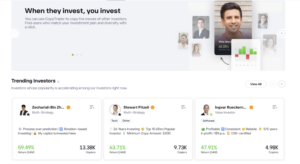
eToro’s licensing across multiple Tier-1 jurisdictions ensures client funds are segregated and protected under strict capital requirements. Beginners can get started with a generous demo account that mirrors live conditions before trading with real funds. Overall, eToro lowers the barrier to entry while maintaining professional-grade security and execution.
Pros
- Intuitive interface with no steep learning curve
- Automatic copy trading system
- Strong regulatory oversight and fund protection
- Zero commissions on many forex trades
Cons
- Spreads are slightly wider than raw-spread specialists
- Limited advanced charting tools for expert technical analysis
Standout Feature: CopyTrader system
Avg EUR/USD Spread: ~1.0 pips
Leverage: Up to 1:30 (major pairs, region-dependent)
Minimum Deposit: $50
Pepperstone: Best for Low-Cost, High-Speed Execution
Pepperstone delivers one of the most competitive environments for forex trading. Established in Australia in 2010, it offers raw spreads from 0.0 pips on its Razor account paired with low commissions, making it ideal for scalpers and high-frequency strategies.
Traders choose from MetaTrader 4, MetaTrader 5, cTrader, and TradingView platforms, all optimized for fast execution through Equinix data centers. The broker supports over 100 currency pairs with deep liquidity from multiple tier-1 banks.
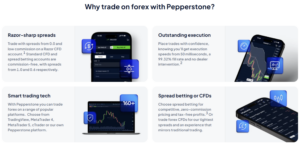
Algorithmic traders benefit from API access and virtual private servers for uninterrupted EA performance. Pepperstone’s regulatory licenses span FCA, ASIC, CySEC, and others, enforcing strict client fund segregation and negative balance protection. Its transparent execution reports show consistently high fill rates even during volatile news events.
While it doesn’t boast lots of educational resources or social trading tools, for traders who prioritize cost efficiency and speed over hand-holding, Pepperstone consistently ranks among the top choices.
Pros
- Ultra-tight raw spreads plus low commissions
- Multiple high-performance platforms
- Excellent for algorithmic and scalping strategies
- No minimum deposit
Cons
- Fewer educational resources for absolute beginners
- No fixed-spread accounts
Standout Feature: ECN-style raw execution
Avg EUR/USD Spread: 0.0–1.1 pips
Leverage: Up to 1:500 (varies by jurisdiction)
Minimum Deposit: $0
IG: Best Overall for Tools and Multi-Asset Trading
IG stands out for its comprehensive suite of trading and research tools that serve both forex specialists and multi-asset investors. With a history dating back to 1974, IG offers a proprietary web platform featuring advanced charting, economic calendars, and real-time sentiment indicators.
Traders can access 90+ currency pairs alongside indices, commodities, and shares through a single login. The platform also supports spread betting in eligible jurisdictions and provides detailed technical analysis from in-house experts. Mobile trading is seamless with push notifications and one-click order placement.
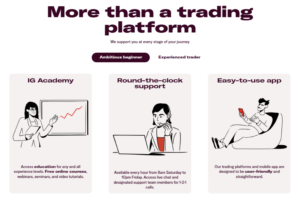
IG’s standout education center includes structured courses, live webinars, and risk-management simulators that help traders progress from novice to advanced levels. Regulation by the FCA and ASIC, among others, guarantees high standards of client protection and transparent pricing.
This broker also boasts deep liquidity pools, resulting in minimal slippage even in fast markets. For traders who want a single platform that scales with their ambitions and offers extensive analytical depth, IG delivers great versatility and reliability.
Pros
- Industry-leading research and education
- Reliable execution across thousands of markets
- Robust risk-management tools
- Long-established reputation
Cons
- Spreads on standard accounts are not the tightest
- Interface may feel busy for ultra-minimalist users
Standout Feature: Comprehensive research suite
Avg EUR/USD Spread: ~0.6–0.9 pips
Leverage: 1:30–1:200 (region-dependent)
Minimum Deposit: Low
Interactive Brokers: Best for Professionals and Advanced Traders
Interactive Brokers caters to serious traders who demand institutional-grade infrastructure and rock-bottom costs. Its Trader Workstation platform supports complex order types, global market access, and sophisticated analytics, including option pricing models and portfolio risk tools.
Over 100 currency pairs are available with true interbank pricing and commissions as low as $2 per trade for high-volume clients. This forex trading platform offers API and FIX connectivity, which appeals to quantitative traders building custom algorithms.
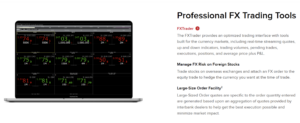
Regulation by the CFTC, NFA, FCA, and ASIC ensures top-tier oversight and segregation of client assets. Interactive Brokers also offers extensive backtesting capabilities and a robust paper-trading environment. While the learning curve is steeper than consumer-focused platforms, the depth of tools rewards experienced users with superior control and efficiency.
Margin requirements adjust dynamically, and traders benefit from interest on idle cash balances. For professionals managing large portfolios or executing multi-leg strategies across asset classes, Interactive Brokers remains the benchmark for precision and value.
Pros
- Lowest commissions for high-volume trading
- Deep liquidity and global market access
- Advanced API and analytics tools
- No minimum deposit requirement
Cons
- Steeper learning curve for beginners
- The platform can feel overwhelming initially
Standout Feature: Advanced API and analytics
Avg EUR/USD Spread: ~0.2 pips + commission
Leverage: Up to 1:50
Minimum Deposit: $0
FOREX.com: Best for Education and Platform Variety
FOREX.com combines strong educational content with flexible platform options that suit traders at every stage. Part of StoneX Group, it provides access to 80+ currency pairs through MetaTrader 4, MetaTrader 5, and its proprietary platform.
The education hub features in-depth courses, video libraries, and daily market briefings that cover technical analysis, fundamental drivers, and risk management. Another beginner-friendly tool is the demo account that replicates live spreads and execution, allowing risk-free practice.

US clients benefit from CFTC/NFA regulatory oversight, while international traders can access higher leverage through other regulated entities. FOREX.com’s raw-spread accounts deliver competitive pricing for active traders, and its mobile forex trading app supports full charting and order management on the go.
Execution reports confirm high fill quality, and the broker maintains transparent slippage statistics. Overall, FOREX.com ranks among the best forex brokers for traders who value continuous learning alongside reliable technology.
Pros
- Extensive educational resources
- Multiple platform choices
- Transparent execution reporting
- Strong regulatory compliance
Cons
- Standard account spreads are wider than raw options
- Minimum deposit required for some account types
Standout Feature: Comprehensive education center
Avg EUR/USD Spread: 0.8–1.2 pips
Leverage: Up to 1:50 (US)
Minimum Deposit: $100
tastyfx: Tailored for US Traders
tastyfx, rebranded from IG’s US operations, focuses exclusively on forex and delivers a streamlined experience tailored to American traders. Regulated by the CFTC and NFA, it offers 80+ pairs with tight spreads starting at 0.8 pips on its standard account and raw pricing on Zero+ accounts.
The platform integrates TradingView charts and supports MetaTrader 5 for advanced users. The minimum deposit is just $1, lowering the entry barrier while maintaining full regulatory protections. Educational content includes live sessions and strategy guides designed for active traders, while mobile trading is fully featured with real-time alerts and quick order entry.
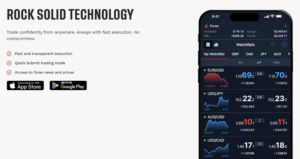
tastyfx emphasizes transparency with daily volume reports and competitive overnight financing rates. Its parent company’s long track record adds confidence for US clients seeking a dedicated forex broker without unnecessary complexity. For American traders prioritizing regulation, low costs, and focused tools, tastyfx ranks among the best forex brokers in the USA.
Pros
- Excellent for US-regulated trading
- Very low minimum deposit
- Competitive spreads across account types
- Focused forex platform
Cons
- Limited to US residents
- Fewer multi-asset options than global brokers
Standout Feature: US-focused regulatory strength
Avg EUR/USD Spread: ~0.8 pips
Leverage: 1:50
Minimum Deposit: $1
OANDA: Best for Research and Transparency
OANDA has earned trust through decades of transparent pricing and powerful research tools. Traders have access to over 90 currency pairs with competitive core pricing once a modest balance threshold is met.
The platform features advanced charting, historical data downloads, and proprietary correlation matrices that can benefit experienced traders. OANDA’s fxTrade platform and MT4/MT5 integration support automated trading, while its API enables custom solutions.

Regulation by the CFTC, NFA, FCA, and ASIC provides robust client protections, and the broker publishes detailed execution and slippage reports quarterly, allowing traders to verify performance.
The OANDA forex app also boasts full functionality, including economic calendars and sentiment indicators, making it a popular choice for data-driven traders who rely on research to inform decisions.
Pros
- High transparency with public execution reports
- Strong research and historical data tools
- No minimum deposit
- Reliable API for automation
Cons
- Core pricing requires a higher balance for the best rates
- Spreads can widen on standard accounts
Standout Feature: Research and transparency tools
Avg EUR/USD Spread: ~1.0–1.7 pips
Leverage: Up to 1:50
Minimum Deposit: $0
AvaTrade: Best for Fixed Spreads and Mobile Trading
AvaTrade simplifies forex trading with fixed spreads that remain stable regardless of market volatility. The broker offers 50+ pairs through its proprietary platform, MetaTrader 4, and MetaTrader 5. Fixed spreads of around 0.9 pips on major pairs appeal to beginners who prefer predictable costs.
The broker boasts high-quality mobile trading with a dedicated app that includes one-touch execution and full charting. AvaTrade’s regulatory coverage spans ASIC, FSCA, and multiple European authorities, ensuring fund safety. Educational materials include video tutorials and a trading academy that covers everything from basics to advanced strategies.
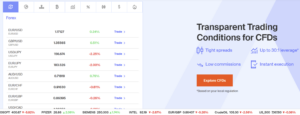
Automated trading via Expert Advisors is fully supported, and the broker offers Islamic accounts with no swaps. Overall, AvaTrade is a solid choice offering simplicity, consistency, and strong mobile functionality.
Pros
- Predictable fixed spreads
- Excellent mobile trading app
- Strong educational academy
- Multiple regulated entities
Cons
- Fewer currency pairs than specialists
- Higher minimum deposit than some competitors
Standout Feature: Fixed spreads and mobile focus
Avg EUR/USD Spread: Fixed ~0.9 pips
Leverage: Up to 1:400 (varies by jurisdiction)
Minimum Deposit: $100
How to Choose a Forex Broker
Here are the key factors to consider when comparing brokers to make sure you find the right match for you:
Regulation
Regulation forms the foundation of broker safety. Top-tier regulators such as the FCA in the UK, ASIC in Australia, and the CFTC/NFA in the United States enforce strict rules on client fund segregation, capital reserves, and transparent reporting. These bodies conduct regular audits and maintain compensation schemes that protect traders if a broker fails.
Always verify a broker’s license on the regulator’s official website to ensure it’s safe and reliable. Offshore licenses may offer higher leverage but often provide weaker protections, so prioritizing Tier-1 regulation minimizes the risk of fund mismanagement or unfair practices.
Pricing
Pricing directly affects profitability, especially for frequent traders. Compare spreads, commissions, and any inactivity or withdrawal fees. Raw-spread accounts with commissions often prove cheaper for high-volume trading, while spread-only accounts suit occasional traders.
You should also factor in swap rates for positions held overnight. Forex trading brokers must publish average spreads and execution statistics, so traders can review these independently rather than going off advertised minimums, which may apply only under ideal conditions.
Account Types
Brokers typically offer standard, raw/ECN, Islamic (swap-free), and demo accounts. Standard accounts provide simplicity with fixed or variable spreads, while raw accounts deliver interbank pricing plus commissions for better value at larger trading scales. Islamic accounts comply with Sharia principles by eliminating overnight fees.
Demo accounts let you test platforms and strategies without financial risk, which is particularly important for beginner forex traders. Choose the type that aligns with your trading frequency, style, and religious or regional requirements.

Leverage
In forex trading, leverage is a tool that allows you to borrow capital from the broker to boost the value of trades, and can therefore amplify both gains and losses. Regulators cap it at 1:30 or 1:50 in many jurisdictions to protect retail traders, while some offshore entities allow up to 1:500.
Higher leverage increases the risk of margin calls during volatility, so you should assess your risk tolerance and trading strategy before trading with high leverage amounts. Reliable forex brokers like the ones we’ve reviewed offer tools to reduce leverage on request and to help control risk.
Trading Platforms
Most top forex brokers offer their own proprietary trading platforms, only designed to be clean and user-friendly. However, many experienced traders prefer to use third-party platforms, like MetaTrader 4 and MetaTrader 5, due to their advanced trading tools. Supported third-party platforms vary a lot from broker to broker, so make sure to check this before signing up.
Range of Pairs
A broad selection of currency pairs provides more opportunities when you trade forex. Look for at least 50 pairs covering majors, minors, and exotics. Major pairs like EUR/USD usually have the tightest spreads and highest liquidity, so make sure to confirm the broker offers the specific pairs you intend to trade and check liquidity during your preferred trading sessions.
Features and Tools
The best forex trading platforms in the USA provider efffective trading tools that can enhance decision-making and execution. Advanced charting, economic calendars, news feeds, and automated trading support (EAs or APIs) are essential for all forex traders, while backtesting capabilities and sentiment indicators add value for strategy development.
While experienced traders will prioritize more advanced features, beginners often prefer platforms with social and copy trading tools that offer a gentler introduction into the world of forex.
Minimum Deposit and Payment Methods
Many brokers now offer zero or very low minimum deposits, making forex trading highly accessible. However, a higher starting balance often unlocks better pricing tiers or full platform features.
You should also review deposit and withdrawal methods – credit cards, bank transfers, e-wallets, and cryptocurrencies – to ensure your preferred options are accepted, and to review speed and fees. Instant funding options reduce downtime, while free withdrawals help preserve capital.
User Experience
A clean, intuitive interface is important to reduce errors and frustration when trading forex. Look for a responsive design, customizable layouts, and fast loading times. User reviews and demo testing can help determine whether the user experience meets your expectations.
Mobile Trading
Mobile apps have become essential for monitoring positions and executing trades while on the move. The best USA forex trading apps replicate desktop functionality with full charting, order management, and push notifications. Check app store ratings and test responsiveness across different devices and network conditions to ensure a broker’s mobile experience is up to scratch.
Customer Support
Reliable support can resolve issues quickly during volatile periods, so traders should seek brokers offering 24/5 or 24/7 assistance via live chat, phone, and email. Response times and knowledge depth matter more than availability alone, so test support before committing real funds and check what existing users have to say.
How do Forex Trading Fees Work?
Forex trading fees consist primarily of spreads, commissions, and swap (or rollover) charges, with occasional account maintenance fees. Understanding each component helps calculate true trading costs and determine which brokers offer the best value.
Spreads
The spread is the most common cost when trading forex. It’s the difference between the buying (ask) and selling (bid) price of a currency pair. For example, if EUR/USD is quoted at 1.1000 / 1.1001, the spread is 1 pip. Since you enter a trade at the higher price (ask) and sell at the lower price (bid), you’re technically starting the trade with a slight loss.
For a standard lot (100,000 units), a 1-pip spread would cost you approximately $10. Spreads can vary depending on market conditions, liquidity, and the broker’s pricing model. Some brokers offer tighter spreads, while others may charge a higher spread, particularly during volatile market conditions or off-peak trading hours.
Commissions
Some brokers offer raw spread accounts, where they charge very low spreads (sometimes as low as 0.0 pips), but instead of widening the spread, they charge a commission per trade. For example, if the broker offers a 0.1 pip spread (~$1) and charges a $7 commission per trade (round turn), your total cost for that trade would be around $8. While this may seem like an additional cost, these accounts can be more cost-effective for active traders, especially those who trade in high volume.

Swap fees
Swaps (or rollover fees) apply when positions remain open past 5 pm New York time. They reflect the interest rate differential between the two currencies. A long position in EUR/USD might earn a small positive swap if euro rates exceed dollar rates, while the opposite position incurs a charge. For example, holding one lot of EUR/USD overnight could cost or earn approximately $5–$15, depending on current rates and broker policy.
Some brokers also add inactivity fees after three months of no trading – typically $10–$50 per month – or withdrawal fees for certain methods. Always review the broker’s full fee schedule and use their cost calculators to model realistic scenarios before trading.
How to Start Forex Trading
Looking to get started with a forex trading platform today? Follow these steps with eToro as a practical example to get started:
- Visit the eToro website and click “Join Now.” Complete registration with your email, password, and basic personal details.
- Verify your identity by uploading a government-issued ID and proof of address as required by regulations. This step usually takes minutes to a few hours.
- Fund your account using a credit/debit card, bank transfer, or supported e-wallet. Minimum deposits start at $50.
- Practice risk-free on the demo account, which mirrors live market conditions and spreads.
- Switch to a live account, search for your chosen pair (e.g., EUR/USD), select position size, set stop-loss and take-profit levels, and execute the trade with one click.
Things to Consider Before Trading Forex
- Leverage amplifies risk: Even small market moves can wipe out an account if leverage is misused. Use it sparingly and always with stop-loss orders.
- Set a clear budget: Only risk money you can afford to lose entirely. Treat trading as a hobby or a side hustle rather than a guaranteed income source.
- Master risk management: Never risk more than 1–2% of your account on any single trade. Combine stop-losses, position sizing, and diversification to minimize risk.
- Understand licensing and jurisdiction: Confirm the broker’s regulator matches your location and offers adequate protections. Avoid unregulated or poorly regulated entities.
- Market volatility matters: News events and economic releases can cause rapid price swings. It’s generally advised to trade during liquid sessions and avoid overexposure.
- Continuous education is essential: Markets evolve, so traders should commit to ongoing learning through courses, analysis, and performance review.
- Psychological discipline: Emotional trading leads to poor decisions. Maintaining a trading journal and sticking to a tested plan helps improve discipline.
- Tax implications: Forex profits may be taxable, so all traders should consult a professional to understand reporting requirements in their country.

Conclusion
The best forex broker for you depends on your experience level, trading style, location, and priorities. Traders should weigh up the pros and cons of different brokers to find the one that best matches their needs.
Beginners often start with eToro for its copy trading, accessibility, and user-friendliness, making it a popular choice for new traders. If you’re interested in trying it out, you can use the eToro demo account or jump straight into copy trading after signing up within just a few minutes.
Our Methodology for Ranking Forex Brokers
There are tons of forex brokers out there, so we applied a strict methodology to ensure the ones that made our final list are reliable and offer a high-quality trading experience.
Firstly, we ensure that a broker is regulated in major jurisdictions (such as the US, UK, or Australia), rather than only holding an offshore license, as this guarantees better client protection. We also ensure the broker has a generally strong reputation amongst users and no history of security breaches.
Then, we look at the fundamentals: range of forex pairs, pricing, user experience, trading tools, mobile app, minimum deposit, supported platforms, and customer support. We assess the strength of the broker in each area compared to other platforms, and then score it in each aspect.
Then, we assign brokers a total score and bring them together in a ranked list, ensuring that only the best platforms make it to the top.
FAQs
What is the best forex broker for beginners in 2026?
eToro is widely considered one of the best forex brokers for beginners due to its intuitive interface, copy trading options, and extensive educational resources.
What is the safest forex broker?
Brokers licensed in Tier-1 jurisdictions like the US, UK, and Australia are the safest, with client funds segregated and protected by compensation schemes.
What is a good minimum deposit for forex trading?
Many brokers accept $0–$100, but starting with $500 or more allows realistic risk management and access to better pricing tiers.
How much money can I make trading forex?
Forex trading results vary widely and most retail traders lose money. Success requires skill, discipline, and time, and traders should treat it as a professional endeavor rather than a get-rich-quick scheme.
Do I need a forex trading app?
Yes. Reliable mobile apps from brokers like eToro or Pepperstone allow you to monitor and manage positions anywhere with real-time data and alerts.
Which forex broker has the lowest spreads?
Pepperstone and Interactive Brokers typically lead with raw pricing and minimal all-in costs for active traders.
How do I choose a forex broker?
You should consider factors like licensing, pricing, range of assets, tools, and customer support when picking a forex trading broker.